Werewolf Genetic Inheritance
The Vampire Prince’s BrideWerewolf Genetic Inheritance is the biological rule governing how werewolf traits pass between generations and, in altered form, between individuals. Its decisive implication is that werewolf identity is neither simply a chosen affiliation nor an isolated supernatural curse: it is a hereditary condition with consequences for conception, pregnancy, bodily transformation, and the future of a family. The rule becomes especially consequential in Roland Davis and Claire Doyle’s pregnancy, where the child’s inheritance promises a werewolf birth but also exposes the severe physical risks imposed by the full moon.
Definition and Transmission
The clearest explanation comes from Roland Davis, who tells Claire Doyle that being a werewolf functions as a dominant gene. A child needs only one werewolf parent to inherit the condition, making a mixed human-werewolf family sufficient for transmission. Roland also distinguishes ordinary inheritance from infection by a bite: a bite may inject the gene or mutate the recipient’s DNA, but that transformation does not occur under every circumstance. The condition therefore combines heredity with a supernatural mechanism of conversion rather than operating as a simple contagious illness.
Roland specifically corrects Claire’s fear that his bite during intimacy might already have transformed her. He explains that biting does not work that way and that the change would require the full moon. This distinction establishes two separate pathways into werewolf identity: a child may be born with the trait through dominant inheritance, while an adult may become a werewolf through a bite only when the required lunar condition is present. The rule thus links genetics, reproduction, and celestial timing without making them interchangeable.
Inheritance and Pregnancy
The inheritance mechanism becomes a direct source of danger when Claire Doyle is carrying Roland Davis’s child. Roland tells her that the baby will be a werewolf because the trait is dominant, even though Claire is human. The pregnancy is therefore not merely a private family development; it reveals how supernatural heredity overrides the apparent boundary between human and werewolf bodies.
The child’s inherited condition also creates a specific reproductive hazard. Roland explains that a werewolf fetus transforms during the full moon, and that the repeated transformations are why Melissa Clarkson could never carry pregnancies to term and why so few werewolves are born. Claire must decide whether to continue a pregnancy that may end in miscarriage at the next full moon. In this context, inheritance is inseparable from risk: the same dominant trait that guarantees the child’s supernatural identity threatens the stability of the pregnancy carrying it.
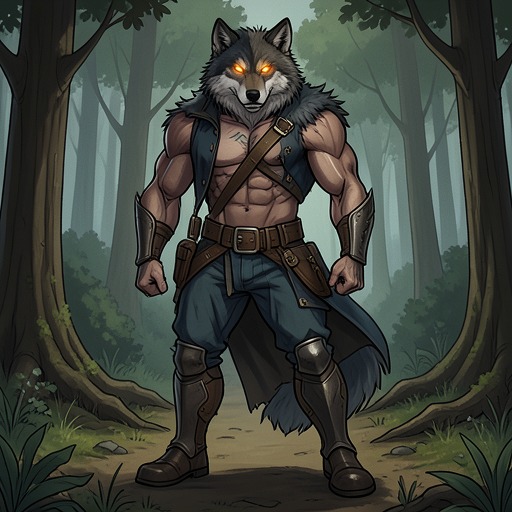
Claire ultimately continues the pregnancy. Each full moon becomes progressively more difficult as the baby grows, and she remains afraid that the next transformation will cause a loss. Roland stays beside her while his own body changes into a humanoid wolf, turning his transformation into both a reminder of the danger and an act of support. When Claire enters labor at thirty-six weeks, she is relieved that childbirth will spare her another full moon while pregnant. The inherited trait has therefore shaped the entire gestational timeline, from the initial disclosure to the calculation of when delivery must occur.
Birth and Early Manifestation
Claire and Roland’s child is born as Ada Doyle-Davis. The birth confirms that a human mother can carry a werewolf child despite the danger created by the fetus’s lunar transformations. The family’s experience turns the genetic rule from an abstract explanation into a lived succession: Roland’s inherited nature is visibly continued in his daughter.
The child’s future development is expected to unfold gradually. The family understands that the signs of her nature may fade after birth, allowing her to appear human for several years. Later, in toddlerhood, she is expected to grow curious about her other nature and begin shifting. Werewolf inheritance therefore does not necessarily announce itself through a permanent infant appearance. It can remain partially concealed while the child’s body and awareness mature, extending the family’s need for caution beyond pregnancy and birth.
The birth also clarifies why supernatural secrecy matters. Roland’s family has explained that the child cannot be born in a hospital because visible signs of shifting may appear from the beginning. The inherited condition consequently affects the location of childbirth, the management of visitors, and the timing of contact around the full moon. Genetic inheritance becomes a social condition as well as a biological one, requiring the family to organize ordinary domestic life around the child’s supernatural development.
Wider Cross-Species Parallels
The werewolf mechanism belongs to a broader pattern of inherited and cross-species embodiment in the book. Thea, a witch, asks Logan whether their child will be a shifter. Logan answers that the chance of the baby not being one is very small and adds that Thea’s witch identity would provide another supernatural inheritance if the child were not a shifter. The exchange presents descent as layered rather than exclusive: one child may stand at the intersection of several supernatural lineages.
Thea and Logan’s daughter is born visibly human in most respects but with patches of purple scales on her arms, legs, and stomach. Those signs are expected to fade, after which she will appear ordinary for several years before beginning to understand and shift into her other nature. This parallel reinforces the developmental pattern associated with werewolf inheritance while showing that the book extends the same concern to other shifter bloodlines. Inherited supernatural identity may be hidden, delayed, or expressed through the child’s body before the child can name it.
The Stlozyn account offers a still broader genetic comparison. Shay explains to Gemma that Stlozyn ancestors were human abducted from Earth centuries earlier, after which certain genes were made more pronounced and additional DNA strands were added. Those changes produced scales and shape-shifting abilities while preserving a common human ancestry. Although this is not the same mechanism as werewolf inheritance, it places supernatural traits within the book’s recurring argument that species boundaries can be rewritten through heredity, mutation, and cross-species reproduction.
Narrative and Ethical Significance
Werewolf Genetic Inheritance converts family formation into a site of knowledge, fear, and negotiation. Roland must explain a biological rule that has historically produced repeated pregnancy losses, while Claire must decide whether the possibility of miscarriage outweighs her desire to continue carrying the child. The narrative treats inheritance as a fact that reorganizes consent and responsibility: the parents must understand what the pregnancy entails, and the risks fall most directly on Claire’s body.
The mechanism also complicates the distinction between nature and choice. A child such as Ada Doyle-Davis does not choose to inherit werewolf identity, while an adult bitten under the full moon may enter that condition through a different route. Later concealment and gradual self-recognition do not erase the inherited fact; they determine how safely and openly the character can live with it. Through pregnancy, birth, and the anticipated onset of shifting, the rule gives supernatural lineage a material timetable and makes family continuity both a source of hope and a continuing physical danger.